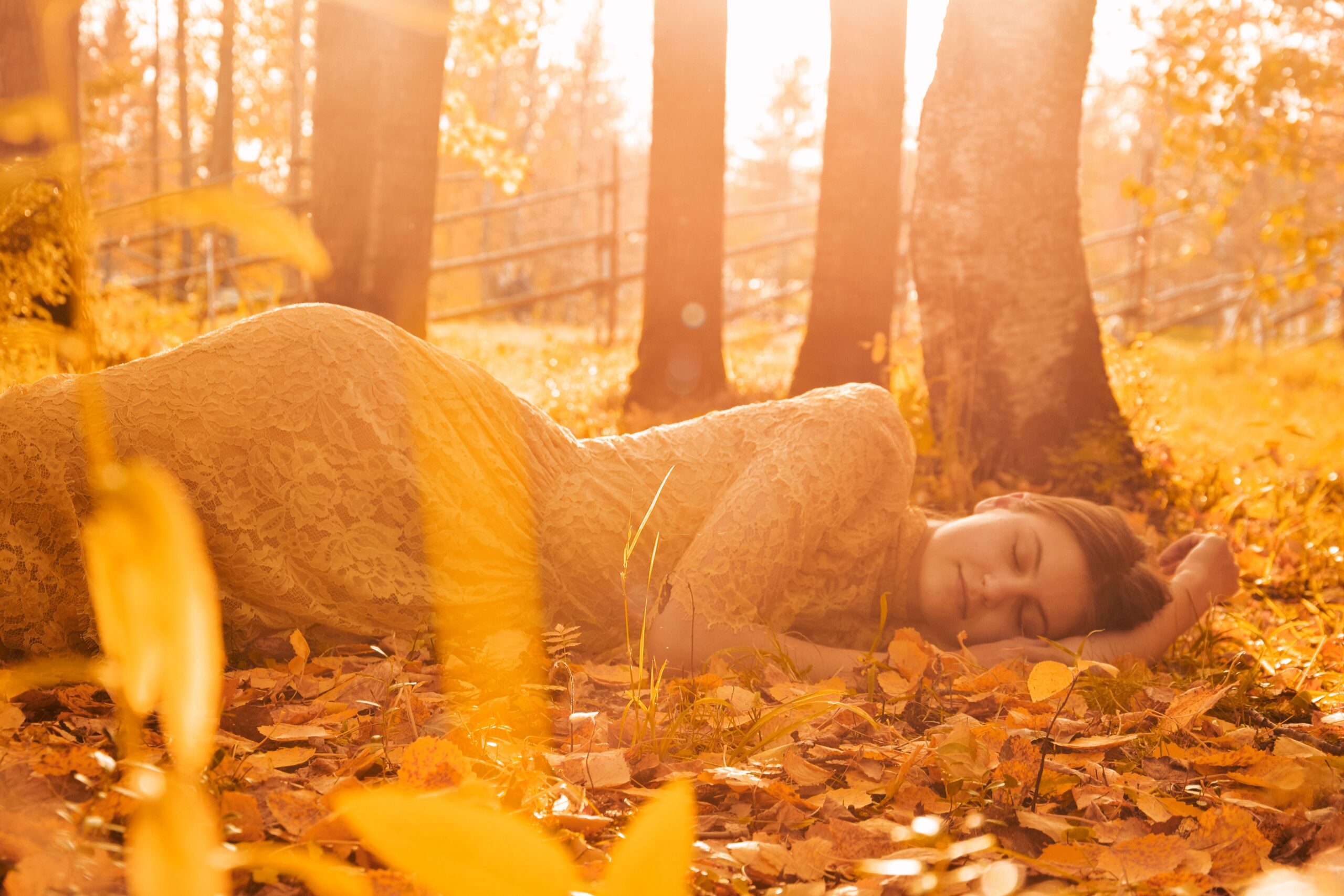


Every year, it happens right around now. The air turns crisper, the light goes golden, and somewhere between the first pumpkin display and the first dark 6:30 p.m., you start to feel… different.
A little more tired. A little more inward. Maybe your sleep is off, your cravings have changed, or your mood has a heaviness you can’t quite name.
If you’re a woman in your 30s, 40s, or 50s who takes good care of herself and still feels thrown off each fall, this post is for you. Autumn isn’t just a change in the weather. It’s a real physiological transition, and your body is responding exactly as it’s designed to.
Let’s talk about what’s actually happening, and how to support yourself through it.
Why You Feel Different in Autumn (It’s Not All in Your Head)
The biggest driver of seasonal change in your body is light.
Your internal clock, your circadian rhythm, takes its cues largely from daylight. As the days shorten after the autumn equinox, your body adjusts.
Melatonin (your sleep hormone) tends to be released earlier in the evening, and many people notice they feel sleepier sooner, have a harder time waking in the dark, or feel groggy in the morning.
Light also plays a role in serotonin, the neurotransmitter tied to mood, calm, and satiety. Less light can mean shifts in mood and a stronger pull toward comfort foods and carbohydrates. That’s not a willpower problem. It’s biology.
And there’s vitamin D. At northern latitudes like ours here in Nebraska, the sun sits too low through much of fall and winter for your skin to make much vitamin D from sunlight.
Since vitamin D supports mood, immunity, and bone health, this is a good time of year to ask your healthcare provider about checking your levels.
Autumn, Hormones, and the Midlife Body
For women in perimenopause or navigating hormonal shifts, autumn can feel like it hits harder. There’s a reason for that.
Estrogen interacts with serotonin and plays a role in sleep quality and mood stability.
When estrogen begins to fluctuate in perimenopause, many women notice more disrupted sleep, more brain fog, more irritability, and a lower mood baseline.
Layer the seasonal drop in light on top of that, and the effects can stack.
If you’ve been doing everything “right” (eating well, moving your body, taking your supplements) and still feel off this time of year, you may be experiencing the overlap of two cycles: the seasonal one and your hormonal one. Understanding that overlap is often the missing piece.
What Your Nervous System Needs in Autumn
Transitions ask something of us, even good ones. And fall is a season of stacked transitions: back-to-school schedules, work ramping up after summer, holiday planning creeping onto the calendar, and a body adjusting to less light.
Your nervous system is constantly reading your environment and deciding how much energy to mobilize. When demands pile up during a season when your biology is asking you to slow down, it can leave you feeling wired and tired at the same time.
The goal isn’t to force your nervous system into calm.
It’s nervous system flexibility, the ability to move through activation and return to rest with more ease. Autumn is a beautiful time to practice that, because the season itself is modeling it: a full, vibrant summer, followed by a natural turning inward.
The Wisdom of Letting Go
Many traditional healing systems have long recognized autumn as a season of release.
In Traditional Chinese Medicine, autumn is associated with the Metal element, the lungs and large intestine, and the themes of grief, clarity, and letting go.
You don’t have to adopt that framework to appreciate the invitation in it, and in what’s happening outside your window.
Trees don’t drop their leaves because they’re failing. They let go of what they can’t carry through winter so they can conserve energy for what matters most.
What would it look like to give yourself that same permission?
5 Simple Fall Self-Care Rituals for Women
You don’t need a seasonal overhaul. You need a few small, supportive practices that work with your body.
1. Get morning light. Ten minutes of outdoor light soon after waking is one of the simplest ways to support your circadian rhythm as the days shorten.
Even on a cloudy day, outdoor light is far brighter than indoor lighting.
2. Let your evenings get earlier. As the sun sets sooner, try dimming lights and screens earlier too.
Your body is already moving toward rest, so meet it there instead of overriding it.
3. Warm your meals. Many women naturally crave soups, stews, roasted vegetables, and warm drinks this time of year.
Seasonal, cooked, grounding foods can feel more nourishing as the weather cools. Listen to that pull.
4. Move outdoors while you still can. A walk in crisp air gives you light, movement, and time in nature all at once, three things that support mood and stress resilience.
5. Do an autumn release ritual. One of my favorite ways to mark the season is a simple journaling practice I call The Three Baskets: what you’re harvesting from this year, what you’re ready to release, and the one thing you’ll carry into winter.
Writing things down by hand has meaningful research behind it for emotional wellbeing, and this practice gives the season a sense of intention.
I shared the complete Three Baskets ritual, with every prompt and step, in my newsletter. [Join here] to get it, along with a simple, seasonal practice for your body and life delivered to your inbox every week.
When Seasonal Shifts Feel Bigger
Some seasonal dips are normal. But if your low mood lasts for weeks, gets in the way of daily life, or comes with feelings of hopelessness, please reach out to your doctor or a mental health professional.
Seasonal Affective Disorder is real, common, and treatable, and you deserve support.
Moving Through Autumn With Your Body, Not Against It
You’re not behind. You’re not lazy. You’re a cyclical being living through a seasonal shift, and your body is doing exactly what it’s designed to do.
This is one of the things I love helping women understand: how the seasons, your hormones, and your nervous system all weave together, and how to build simple rhythms that honor all of it.
When you flow with your cycles, everything gets a little bit easier.
Want a small, meaningful practice for your health and wellbeing every week? [Join the RELEASE newsletter], where I share seasonal rituals, nervous system tools, and gentle guidance for women who are ready to put themselves first.
XOXO,
Serenity