

Somatic Bodywork · Lincoln, NE
A warm, honest look at craniosacral therapy and somatic bodywork — and why so many women in Lincoln are finally feeling like themselves again.
You’re doing everything right. You eat well, you move your body, you’ve read the books and done the inner work. And yet — there’s still this quiet, persistent feeling that something is off.
Maybe it shows up as tightness in your chest that appears out of nowhere. Or a heaviness you can’t quite name. Or that buzzy, wired-but-tired feeling that no amount of sleep seems to fix.
Friend, I hear you. And here’s what I want you to know: that feeling makes complete sense. Your body – It’s actually doing its job — holding onto experiences, stress, and emotions that haven’t had a safe place to land yet. Yet.
This is exactly where somatic bodywork and craniosacral therapy come in — and why I’ve seen them become such a turning point for so many wellness-minded women.
So, what exactly is somatic bodywork?
The word somatic simply means “of the body.” And somatic therapy is built on one foundational truth: your body and mind aren’t separate — they’re in constant conversation with each other.
Modern trauma science has shown us that overwhelming experiences don’t just live in our memories. They can get stored in the body as physical tension, nervous system dysregulation, or chronic stress patterns. This is why you can understand something perfectly well in your head… and still feel completely stuck.
Somatic bodywork bridges that gap. Rather than analyzing your story, it gently asks: What is your body feeling right now? And it creates space for the answer to emerge — without force, without pressure, at exactly your own pace.
Somatic work guides you to tune into physical sensations, notice shifts in your nervous system, gently release stored stress, and build a deeper sense of safety in your own body.
What is craniosacral therapy — and how does it work?
Craniosacral therapy (CST) is one of my favorite modalities to talk about, because the experience of it is so different from what most people expect.
It’s likely like nothing you’ve experienced before.
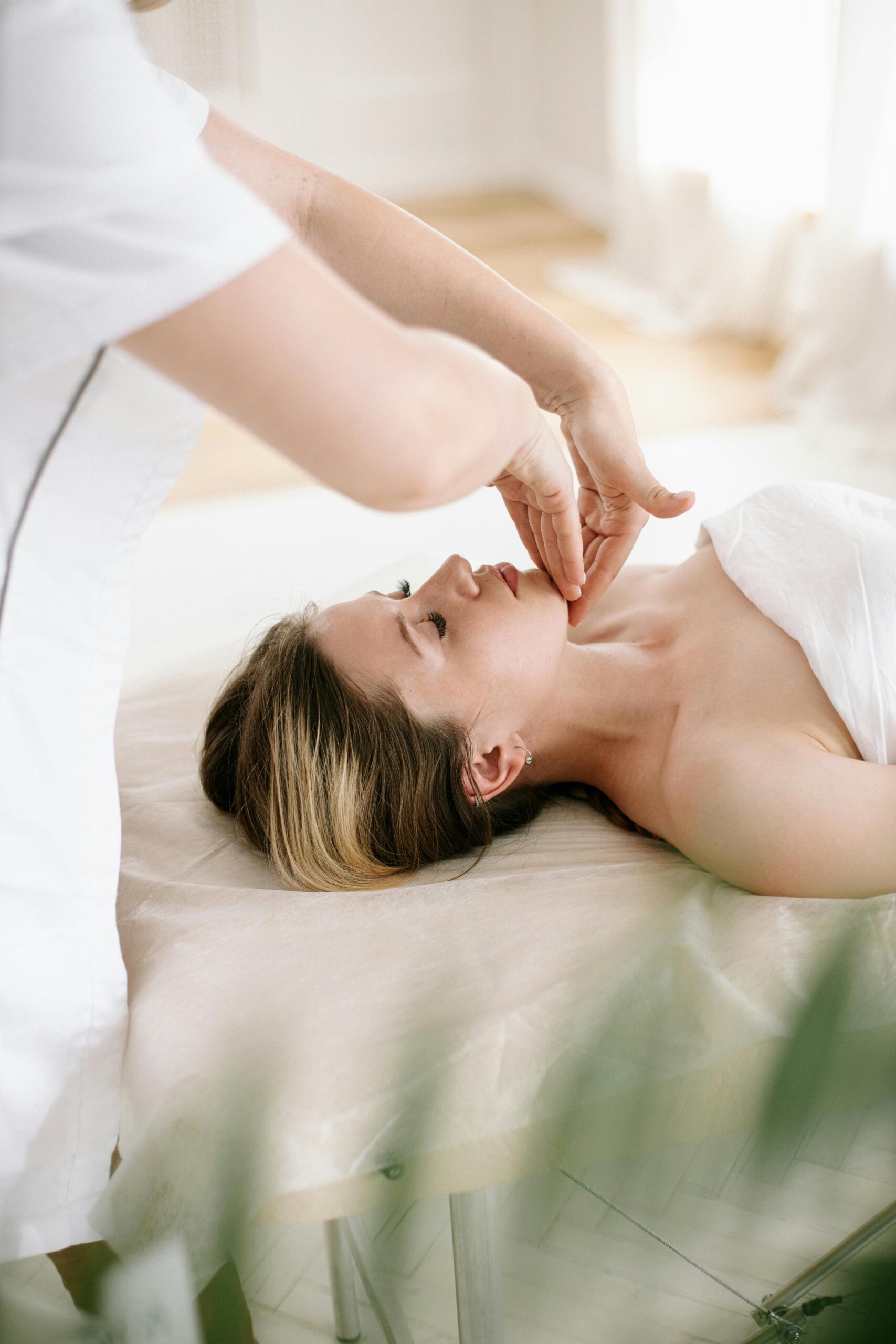
It’s an incredibly gentle, hands-on practice. Using a light touch — often described as the weight of a nickel — a practitioner works with the subtle rhythms of your central nervous system and the connective tissue surrounding it. The goal is simple: help your body shift out of a stressed, “fight or flight” state and into a softer, more regulated one.
Clients often describe it as the deepest rest they’ve ever felt. Some experience emotional releases — a wave of tears, a sigh of relief — without even knowing why. Others simply feel a profound quietness they haven’t touched in years.
“I finally feel like I came home to myself.”
Now, in the spirit of honest conversation — mainstream medical research still considers CST a developing field. The lived experience of clients often runs ahead of the science. That’s worth knowing. This work is best understood as a powerful complement to your overall wellness care, not a replacement for medical treatment.
But for women who feel like they’ve tried everything? It’s often the piece that was missing.
Where these two approaches meet — and why that’s powerful
Somatic bodywork and craniosacral therapy come from slightly different traditions, but they share the same heart: both work with your nervous system, both honor the intelligence of your body, and both create conditions for healing that goes deeper than the mind alone can reach.
Together, they offer what’s called a bottom-up healing approach — starting with the body, shifting your physiology, and letting the mind and emotions follow. It’s the opposite of trying to think your way through stress.
They work with stored stress and trauma — even the quiet kind
Trauma doesn’t have to be a dramatic event. For many of the women I work with, it looks more like years of overgiving, chronic stress, emotional overwhelm, or simply never having space to fully exhale.
These experiences can get “stuck” in the nervous system, showing up as anxiety, tension, fatigue, or a vague disconnection from your body. Somatic work — informed by the groundbreaking research of trauma pioneer Peter Levine — helps those stuck survival responses finally complete and release.
Why this resonates so deeply with women like you
Here’s something I notice again and again, especially with wellness-oriented women in Lincoln who are thoughtful, growth-minded, and deeply committed to their health:
You’ve done so much inner work. And yet the body often gets left out of the conversation.
Many of us learned early to override our needs — to push through discomfort, to stay in our heads, to keep going no matter what. Somatic and craniosacral work gently reverse that pattern. They invite you to feel instead of suppress, to receive instead of push, to slow down instead of constantly perform.
This isn’t about doing more. It’s about coming back to yourself
This work may be a beautiful fit for you…
If you feel stuck despite doing “all the right things”
Experience chronic stress, tension, or overwhelm
Crave a deeper connection to your own body
Are ready to move from functioning to truly feeling
What a session actually feels like if you’ve never experienced somatic bodywork or craniosacral therapy before, here’s what I want you to know: this work is gentle. Slow. Deeply supportive.
There’s no pressure to perform or process on cue. Your body sets the pace. Many women describe a sense of warmth, tingling, or deep relaxation. Some notice emotions rising and softening. Some simply feel — for the first time in a long time — safe.
And that safety? That’s where real healing begins.
A gentle, honest note
I always want to be real with you. Somatic therapies are promising and increasingly supported by research, but the science is still growing. Craniosacral therapy in particular has mixed evidence in mainstream literature. I’ll never oversell you on what this work can do.
What I can tell you is that finding a skilled, trauma-informed practitioner — someone whose approach feels aligned with your values — makes all the difference. And that when the right conditions are present, the body has a remarkable capacity to find its way back to ease.
If you’re a woman in Lincoln, Nebraska or surrounding areas, who’s ready to explore somatic bodywork or craniosacral therapy — or you’re simply curious what it might feel like to finally exhale — I’d love to connect with you.
Let’s talk about your healing ↗ Book Here