

By Serenity | RELEASE Embodied Wellness I Settle in — this one’s about a 13 minute read.
Something happens on my table I’ve never quite found the perfect words for.
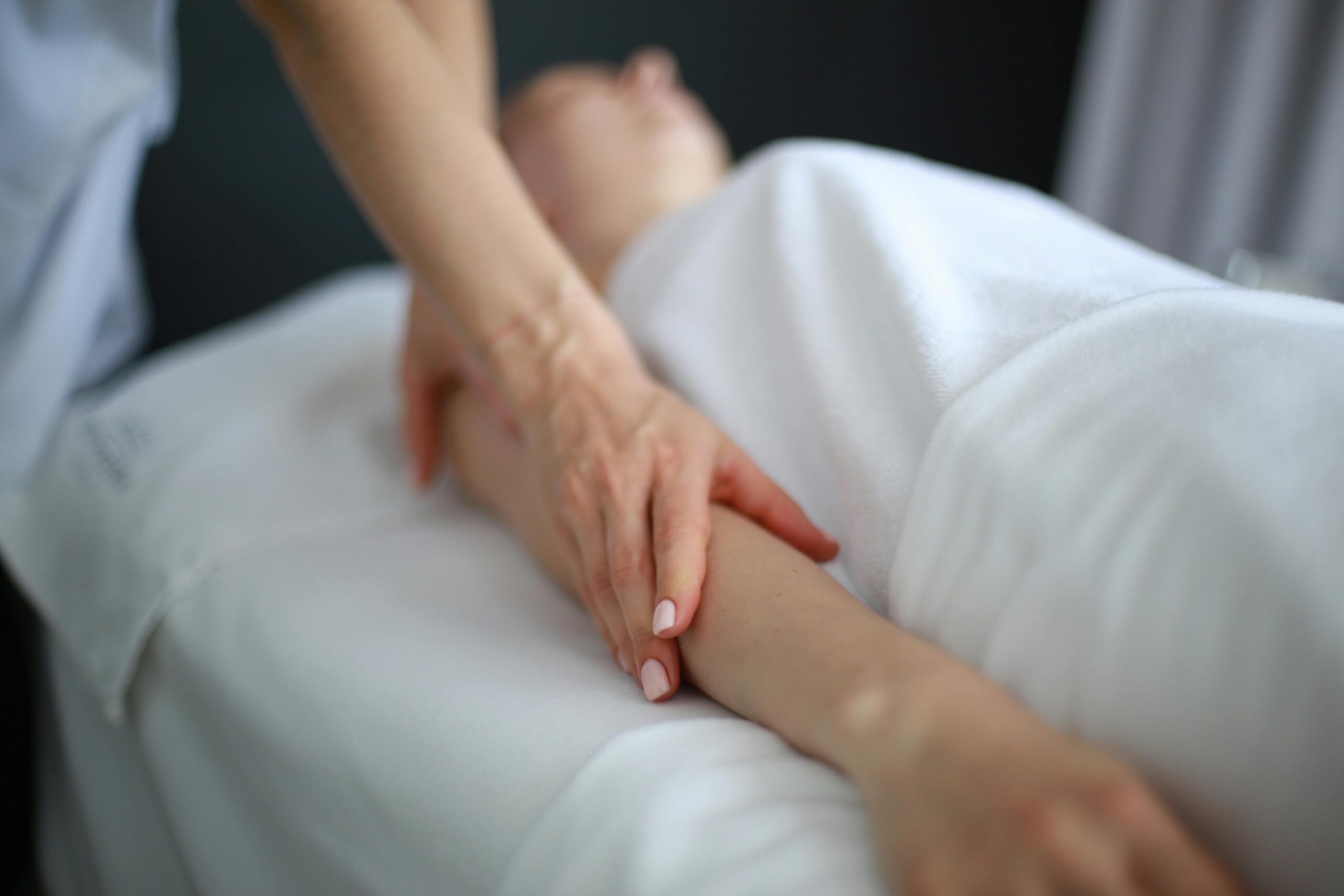
Women come in carrying the weight of their weeks — the mental load, the ache in their shoulders, the low hum of anxiety that they’ve learned to call “normal.” They lie down. I place my hands – soft, gentle, barely moving. The room gets quiet.
And then, somewhere in the middle of the session, something shifts.
Their breathing changes. Their face softens. The slight furrow between their brows — the one they’ve probably had for so long they don’t notice it anymore — dissolves.
When the session ends and I bring them back gently, they often take a long moment before they speak. And when they do, what comes out is almost always some version of the same thing:
“Where did I just go?”
“I wasn’t asleep, but I wasn’t here either.”
“I felt like I was somewhere else.”
“I could hear your voice, but it felt far away — like it was coming from another room.”
“My body disappeared.”
I hear this regularly. And every single time, I find it quietly remarkable — not because it’s strange, but because of what it tells me about what just happened inside that woman’s nervous system.
That place she went? It’s one of the most healing states the human body is capable of entering. And for most of the women I work with, it’s also one of the rarest.
Let’s talk about why.
The State Between: What’ss Actually Happening When You “Float”
The floating sensation during Craniosacral Therapy is not relaxation the way we typically think of it — a warm bath, a warm cup of tea, a long exhale after a stressful day.
It’ss something categorically different.
What clients are experiencing is a deeply altered state of consciousness. Neuroscientists sometimes call this a hypnagogic state — the threshold between waking and sleep where the analytical mind begins to release its grip and the brain shifts into slower, more internally-focused processing. It’s the same territory you pass through right before falling asleep, or the state advanced meditators describe after deep practice. It’ss where vivid imagery, emotional clarity, and a profound sense of spaciousness often live.
In this state, a few things happen simultaneously:
The brain begins shifting from beta waves — the fast, alert, problem-solving frequency that drives most of your waking hours — toward alpha and theta waves. Alpha is the state of calm, relaxed attention. Theta is slower still: the frequency of dreamlike awareness, emotional integration, and deep creativity. Many researchers believe theta states are particularly associated with memory processing, intuition, and access to the deeper layers of emotional experience.
At the same time, the autonomic nervous system begins shifting from sympathetic dominance — the body’s fight-or-flight mode — toward parasympathetic activation, sometimes called the rest-and-repair state. Breathing slows and deepens. Heart rate decreases. Muscles release unconscious tension that was never fully registered as tension to begin with.
And something else happens that is harder to measure but no less real: the part of the brain responsible for self-monitoring, future-worrying, and running the endless loop of mental commentary quiets down. Neuroscientists call this the Default Mode Network — the system associated with rumination, self-referential thinking, and the low-grade hum of mental noise that follows most of us through our days. When clients float, that network settles. The mental chatter softens. Time becomes slippery and irrelevant.
What is left is something that feels, to the woman on the table, like herself — but quieter, more spacious, more fully arrived in her own body than she usually is.
For many women, this is the first time they have felt truly here in years, and dare I say, maybe actually, ever.
Why This State Is So Hard to Find on Your Own
Here is something worth sitting with: the floating state is not exotic or unusual in any mystical sense. Your nervous system is designed to access it. The problem is that modern life makes it nearly impossible to get there.
Consider what it actually takes to enter that state: a genuine sense of safety, a quieting of external demands, the absence of stimulation, and enough accumulated calm that the body finally trusts it’s allowed to let go.
Most of us have none of those things most of the time.
We are chronically overstimulated — phones, notifications, noise, the mental load of managing households and careers and relationships and aging parents and children who need things. Even when we lie down to rest, the nervous system stays alert, scanning for what’s next.
Many of the women I work with are high-functioning, responsible, deeply capable humans who have been running on adrenaline and willpower for so long that their nervous systems have genuinely forgotten what it feels like to fully stop. They might sleep. They might take a walk. They might even have a meditation practice. But that deep, threshold state — that floating place — stays just out of reach.
Craniosacral Therapy creates a particular kind of environment that the nervous system recognizes as safe on a physiological level — not just intellectually, but in the body. The stillness, the light touch, the unhurried quality of the work, the fact that nothing is being demanded of you — your system reads these cues and begins, gradually, to let down its guard.
This is why I often have clients tell me: “I’ve tried meditation and I can’t do it. But I go somewhere deep every time I’m on your table.”
They’re not doing anything wrong with meditation. Their nervous systems simply need more scaffolding — the presence of another regulated human being, the safety of gentle contact, the permission that comes from lying completely still with no agenda — to make the descent.
The Neuroscience of Safe Touch
Touch is one of the most powerful portals into the nervous system — and not all touch is created equal.
The kind of contact used in Craniosacral Therapy is extraordinarily gentle. We’re talking about pressure that, in many holds, is no more than the weight of a nickel. And yet this quality of touch — slow, sustained, non-demanding — activates a specific class of nerve fibers called C-tactile afferents.
These fibers are not responsive to deep pressure or fast movement. They respond specifically to gentle, nurturing touch delivered at a pace that the brain interprets as safe. When they fire, they send signals directly to the parts of the brain associated with emotional processing, social bonding, and parasympathetic regulation. In other words, they tell the nervous system: You can relax. You’re not in danger. You’re being cared for.
This isn’t a metaphor. This is measurable neuroscience.
And for women who carry a lot — who are the caregivers, the managers, the people others lean on — being on the receiving end of attuned, non-demanding touch can be a genuinely foreign experience. The body doesn’t quite know what to do with it at first. Then, slowly, it remembers.
The floating begins.
About Those Twitches, Sighs, and Sounds — That’s Your Body Releasing
About half of my clients experience something else during sessions that can initially feel surprising: involuntary physical responses. A sudden twitch in a leg or arm. A long, shuddering sigh. Their stomach rumbling loudly. A yawn that seems to come from nowhere. Sometimes tears, with no clear emotional cause.
I want to say something very clearly about this: this is a good sign. A very good sign.
These involuntary responses are what happens when the autonomic nervous system shifts gears. They are not signs that something is wrong — they are evidence that something is releasing.
Here is the physiology behind what you’re observing:
Muscle twitching happens when the nervous system releases tension that was held unconsciously — often for a very long time. Muscles that have been braced and guarded (think: tight shoulders, a jaw that is perpetually clenched, a belly that never fully softens) begin to let go. As they do, the nervous system sometimes sends a brief signal that looks like a jolt or a twitch. It is the body’s version of a sigh: letting go.
Deep sighing and yawning are classic parasympathetic signatures. They signal the nervous system moving out of shallow, guarded breathing and into the fuller respiratory patterns associated with safety and rest. A spontaneous sigh during a session is, quite literally, your body exhaling a threat it had been holding.
Digestive sounds — the gurgling, rumbling stomach — are among my favorite things to hear, because they tell me something has genuinely shifted. The digestive system is one of the first to go offline under chronic stress; the gut essentially pauses its work when the body perceives danger. When the belly begins to speak, it means the parasympathetic system has taken the wheel.
Spontaneous tears are perhaps the most emotionally meaningful response. When the analytical mind quiets and the body’s defenses soften, emotions that have been held below the surface — not in any dramatic or traumatic way necessarily, just the quiet accumulation of unexpressed feeling that builds up in a busy life — sometimes rise and move through. Women often apologize for this, and I always tell them the same thing: there is nothing to apologize for.
All of these responses share something in common. They’re the body’s way of completing something it’s been holding — and then letting it go.
What This Does to You After You Leave
The floating state is profound while it’s happening. But one of the things I find most remarkable about Craniosacral Therapy is what it does to a woman after she leaves.
There’s a reason clients tell me things like:
“I slept better that night than I have in months.”
“I felt more patient with my kids all week.”
“Something shifted and I can’t explain it — I just felt more like myself.”
“I cried on the way home and felt completely fine after — like something had been waiting to move.”
These are not coincidences, and they’re not placebo. They’re the downstream effects of a genuine nervous system reset.
When the body spends time in deep parasympathetic activation, several things happen at the physiological level. Stress hormones like cortisol begin to drop. The inflammatory cascade that chronic stress sustains begins to quiet. Muscle tension that has been contributing to headaches, jaw pain, neck stiffness, or pelvic holding begins to release — not just during the session, but in the hours and days following, as the nervous system recalibrates.
Sleep often improves because the nervous system finally has a reference point for what safe feels like. The body remembers, and it can access that state more easily at night.
Emotional regulation often improves for similar reasons. When the nervous system is chronically wound up, small things feel enormous — a sharp word from a partner, an unexpected change of plans, a child’s meltdown. After a session, there is often a softness, a wider window of tolerance. Things that would have triggered a stress spiral simply land differently.
Many clients describe an increased sense of presence — a feeling of being more fully in their body, more connected to what they actually feel and need, less on autopilot. For women who are used to living from the neck up, operating on logic and willpower and the sheer force of keeping everything together, this can feel quietly revolutionary.
Why This State Is So Rare — And Why It Matters More Than We Think
We live in a culture that has declared war on stillness.
Productivity is worshipped. Busyness is a status symbol. Rest is framed as something you earn, not something you are entitled to as a living, breathing human with a nervous system that requires recovery.
Most women I work with are extraordinary — deeply capable, often high-achieving, genuinely caring people. And they are exhausted in a way that sleep alone cannot touch. Not because they’re weak or doing something wrong, but because they have been running at a pace that their nervous systems were never designed to sustain indefinitely.
The body is not meant to live in a constant state of alertness. It requires rhythmic oscillation between activation and restoration — between doing and being, between engaging and releasing. When that oscillation is chronically disrupted, something inside us begins to suffer in ways we often can’t name but absolutely feel.
The floating state that Craniosacral Therapy creates is not a luxury. It is a return to something the body already knows how to do — a reminder that deep rest is not only possible, but available, and that the body’s capacity to heal is far greater than we typically allow it to express.
When a woman leaves my table after floating for an hour — softer, slower, somehow more herself than when she arrived — I’m not watching magic. I’m watching a nervous system remember what it feels like to be safe.
And I am watching what happens when we finally, finally give a body permission to let go.
What You Can Expect If You’re New to Craniosacral Therapy
If you’ve never experienced Craniosacral Therapy, it’s worth knowing that the first session can sometimes feel subtle. Not everyone floats immediately. For some women, the first session is the nervous system simply learning to trust the environment — testing the safety cues, taking inventory, deciding whether it’s allowed to relax.
That is completely normal, and it is not a failure of the work. It is work.
Sessions are done fully clothed, lying on a massage table. The touch is remarkably gentle — often resting rather than moving. I work with the head, the sacrum, the spine, and sometimes the abdomen, depending on what your body is asking for. Many clients describe the experience as unlike anything they’ve had in a bodywork setting before — not because it’s strange, but because the depth of relaxation it creates is something they didn’t know was available to them.
The floating usually becomes more accessible with repeated sessions, as your nervous system builds familiarity and trust. Some women experience it partially in their very first session. Others take a few visits to arrive there fully.
However it unfolds for you, the direction is the same: toward regulation, toward restoration, toward a body that remembers it’s allowed to rest.
And in my experience, that is a direction worth moving in.
Ready to Experience It for Yourself?
If you’re curious about Craniosacral Therapy and what it might offer your nervous system, your body, and your overall wellbeing, I’d love to support you. Sign me up!
And if you have questions about whether CST might be a good fit for what you’re experiencing, feel free to reach out. There is no pressure — just an open conversation.
You can also explore more about the nervous system, bodywork, and women’s hormonal health in the related posts below.