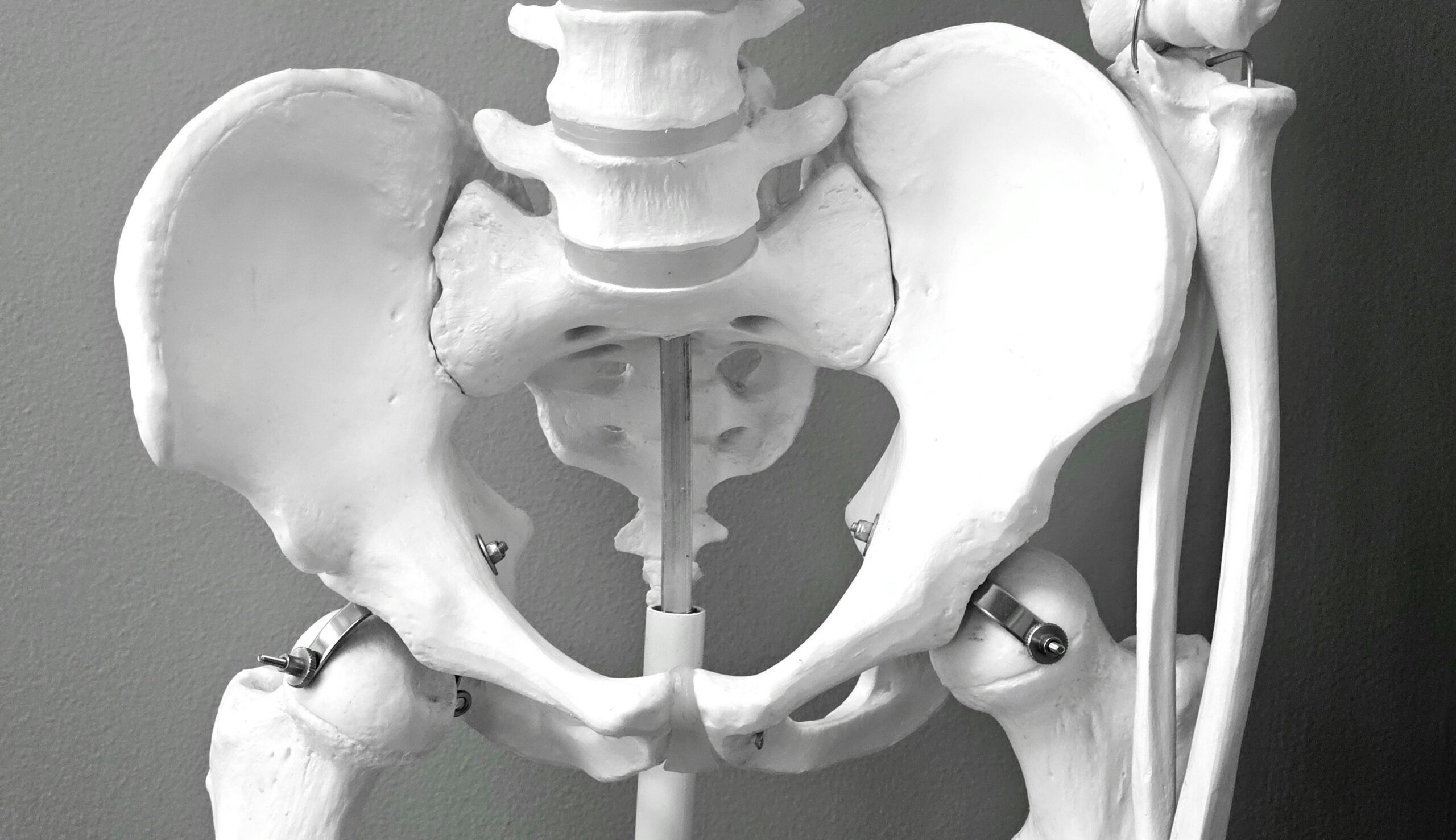


Okay, let’s start here shall we: you’re not imagining it!
That sense that something has shifted in your pelvis — the low back that aches differently than it used to, the pelvic heaviness you didn’t have before, the bloating that doesn’t quite match what you ate, the hip that feels tighter on one side than the other — it’s real. You’re not imagining it. And it’s more common than you realize.
And I’m in it with you.
If you’re somewhere in your 40s and doing all the right things — eating well, staying active, prioritizing your health — and your body still feels like it’s sending you signals you can’t quite decode, this is for you.
Perimenopause pelvic pain and pelvic instability are often overlooked, minimized, or chalked up to “just getting older.” But what’s actually happening in your body during this transition is fascinating, and once you understand it, there’s a clear path forward.
Let’s talk about it — all of it. You in?
What Is Perimenopause, Really?
Most women know perimenopause as “the time before menopause.” If you’ve even heard of it at all. But it’s worth understanding just how significant this transition actually is.
Perimenopause typically begins in a woman’s early-to-mid 40s, though it can start earlier or later, and trust me – this is happening. A lot more women are seeing things in their 30’s these days.
It’s defined as the years during which your reproductive hormones — primarily estrogen and progesterone — begin to fluctuate unpredictably, before eventually declining. I know, boo – right! Menopause itself is defined as 12 consecutive months without a menstrual period, but the transition leading up to it can last anywhere from 4 to 10 years.
During that time, your body isn’t simply “running out of hormones.” It’s recalibrating an entire system. And that recalibration affects far more than your menstrual cycle. It affects your joints, your connective tissue, your muscles, your nervous system, your digestion — and yes, your pelvis.
The Connection Between Perimenopause and Pelvic Pain
Pelvic pain and pelvic discomfort during perimenopause is more widespread than most women realize. Studies suggest that pelvic-related symptoms affect a significant portion of women over 40, and yet many women never bring it up with a provider — either because they assume it’s inevitable, or because they don’t quite know how to describe it.
So let’s name what you might be feeling:
- A low, persistent ache in your sacrum or lower back
- A sense of heaviness or pressure in your pelvic bowl
- One hip feeling higher, tighter, or more restricted than the other
- Bloating or sluggish digestion that doesn’t fully resolve
- Changes in bladder urgency or frequency
- Pelvic pressure that worsens with standing or walking
- A feeling of instability in your core that wasn’t there before
These symptoms often show up together, and they often don’t have a single, clean diagnosis. That’s because what’s happening isn’t one isolated problem — it’s a system that’s shifting.
Here’s why.
Why Perimenopause Disrupts Pelvic Alignment
1. Estrogen Changes Your Ligaments
This is the piece that most women don’t hear about, and it matters enormously.
Estrogen plays a critical role in maintaining the health and elasticity of your ligaments — the connective tissue bands that hold your joints (including your sacroiliac joints and the ligaments supporting your uterus) in place. When estrogen levels begin to fluctuate during perimenopause, these ligaments can become less stable. They may feel lax one week and tight the next, because your hormones are doing exactly that — fluctuating unpredictably.
The result? A pelvis that no longer has the same consistent, reliable support structure it once had. That “unstable” or “off” feeling you’ve been noticing isn’t in your head. It has a physiological explanation.
2. Old Muscle Imbalances Get Louder
Most women carry some degree of muscle imbalance into midlife — tight hip flexors from sitting, weak glutes from years of not specifically targeting them, overactive lower back muscles that have been compensating for a core that was never quite coordinated. Often, these imbalances are quietly present but don’t cause real trouble.
Perimenopause tends to amplify them. As muscle mass naturally begins to decrease after 40 (a process called sarcopenia), and as hormonal shifts affect how efficiently your muscles recover and maintain tone, those quiet imbalances get louder. The pelvis, which depends on the coordinated support of the deep core, glutes, hip flexors, and pelvic floor, loses its neutral alignment more easily.
3. Fascia Becomes Less Flexible
Fascia is the web of connective tissue that surrounds and connects every muscle, organ, and bone in your body. It’s one of the most underappreciated structures in women’s health.
During perimenopause, hormonal shifts — combined with the accumulating effects of stress, dehydration, and reduced movement — can cause fascia to become stiffer and more restricted. When the fascial network in your abdomen tightens, it doesn’t just create local discomfort. It can literally pull on your pelvis, your uterus, and your pelvic floor — creating tension and restriction that radiates in ways that feel confusing and hard to locate.
4. Pelvic Organs Shift Position
This is one of the least-discussed aspects of pelvic health in perimenopause, and it’s one of the most important.
Your uterus, bladder, and intestines are not fixed in place. They are held in their optimal position by a network of ligaments and fascial supports. Over time — and especially during the hormonal changes of perimenopause — those supports can become lax, causing organs to shift slightly from their ideal positioning.
When the uterus is even slightly out of position (tipped backward, fallen too low, shifted to one side), it doesn’t just affect reproductive function. It affects the entire pelvic ecosystem. Circulation is reduced. Lymphatic flow is impaired. Nerve pathways can be compressed. And this can contribute to everything from digestive sluggishness to low back ache to that persistent sense of heaviness.
5. Your Nervous System Is in the Middle of It All
Here’s something that doesn’t get nearly enough airtime in conversations about perimenopause pelvic pain: your nervous system is deeply involved.
Hormonal fluctuations during perimenopause directly affect your stress response system. Estrogen has a regulatory effect on the nervous system, so as levels become erratic, many women find they feel more sensitive, more reactive, or more easily activated. Chronic low-grade stress — the kind that’s subtle but constant — keeps the body in a mild sympathetic (fight-or-flight) state, which means muscles stay slightly braced, fascia holds tension, and the body has a harder time releasing and restoring.
Pelvic tension is often held tension. And for women navigating perimenopause, that connection between nervous system and pelvic pain is real, bidirectional, and worth paying attention to.
Why the Standard Advice Isn’t Enough
If you’ve googled “perimenopause pelvic pain” before landing here, you’ve probably read some version of the same list: do your Kegels, strengthen your core, stretch your hips.
And look — none of that is wrong. But it’s incomplete. Here’s what gets left out:
Pelvic alignment during perimenopause is not primarily a muscle problem. It’s a whole-system problem. Addressing only the muscles while ignoring organ positioning, fascial restriction, hormonal impact on ligaments, and the nervous system is like trying to fix a plumbing issue by only cleaning the faucet.
You need an approach that works on the whole system.
What Is Mayan Abdominal Massage?
Mayan abdominal massage — also known as abdominal therapy or Arvigo Therapy — is an ancient, external, non-invasive bodywork technique rooted in traditional Mayan healing practices. It was brought to the modern Western world through the work of Dr. Rosita Arvigo, who trained extensively with Don Elijio Panti, a Mayan healer in Belize.
This isn’t a spa treatment. It’s therapeutic bodywork that focuses specifically on the abdominal and pelvic organs, working to:
- Guide the uterus and surrounding organs back toward optimal positioning
- Restore healthy blood and lymphatic circulation to the pelvis and abdomen
- Release fascial restrictions in the abdominal cavity
- Activate the parasympathetic nervous system (your rest-and-restore state)
- Reconnect you with your body’s own signals and rhythms
In my practice, Mayan abdominal therapy is one of the most powerful tools I use with women in perimenopause — because it addresses multiple layers of what’s happening, all at once.
How Mayan Abdominal Massage Supports Perimenopause Pelvic Health
It Addresses Organ Positioning Directly
This is the piece that no amount of Kegels or hip stretches will touch. When abdominal and pelvic organs have shifted from their optimal position, they create tension on the surrounding ligaments and fascial supports — and that tension radiates throughout the pelvis and low back.
Mayan abdominal massage uses gentle, intentional external manipulation to encourage organs back toward their natural placement. When the uterus is better supported and in better alignment, the entire pelvic landscape shifts. Circulation improves. Pressure decreases. The body stops compensating in ways that create secondary pain.
It Improves Circulation and Lymphatic Flow
Reduced circulation to the pelvis contributes to many of the symptoms women in perimenopause experience — hormonal irregularity, digestive sluggishness, pelvic congestion, and the kind of chronic low-grade discomfort that’s hard to name but impossible to ignore.
Abdominal therapy works directly with the vessels and pathways in the abdomen, encouraging better blood flow and lymphatic drainage. Better circulation means better healing, better hormone delivery, and better overall function.
It Works With Fascial Restriction
Fascial restrictions in the abdomen don’t respond to strengthening exercises. They respond to targeted, sustained touch that signals the tissue to soften and reorganize.
Mayan abdominal massage works with the fascial layer, releasing the kind of deep, chronic holding patterns that accumulate over decades — from stress, from past injuries or surgeries, from pregnancies, from the body’s natural compensation patterns.
It Calms the Nervous System
One of the most profound effects of abdominal therapy — and the one women often comment on most — is how deeply relaxed they feel afterward. Not just sleepy. Settled. Like something they’ve been holding released.
That’s the parasympathetic nervous system being activated. When your body has been living in a low-grade stress state (which many perimenopausal women are, without even realizing it), receiving slow, intentional abdominal touch is a powerful signal of safety. The nervous system softens. Muscles release. Pelvic tension decreases.
This is not a small thing.
It Invites You Back Into Relationship With Your Body
I want to say something here that goes a little deeper than anatomy.
Many women come to see me in perimenopause feeling somewhat estranged from their own bodies. They’ve been pushing through, managing symptoms, trying to keep up — and somewhere along the way, the body stopped feeling like home. It started feeling like something to manage.
Mayan abdominal therapy is, in my experience, one of the most effective ways to begin to reverse that. When you receive this kind of care — slow, intentional, honoring the abdomen and the womb as something worth tending — something softens. Women cry on the table sometimes. Or they laugh. Or they feel something shift that they didn’t even know was held.
That’s part of the healing too. Your body holds more than anatomy. It holds your history. And sometimes it just needs someone to listen.
What to Do at Home: Supporting Your Pelvic Health Between Sessions
Professional bodywork is one layer of support. What you do in the in-between time matters just as much. Here are practices I encourage:
Daily Self-Massage
Part of Mayan abdominal therapy includes learning a simple self-care massage you can do daily at home — it takes about five minutes and is one of the most powerful consistency tools in this work. Regular, gentle abdominal self-massage encourages organ positioning, improves circulation, and keeps the fascial system more supple.
It also gives you a daily practice of checking in with your body. That alone is valuable.
Breathwork Before Movement
Before any core work, spend two to three minutes in slow, diaphragmatic breathing. This activates the deep core — the transversus abdominis and the pelvic floor — in a coordinated, integrated way that isolated exercises can’t replicate. It also signals your nervous system that it’s safe to be in your body.
Thoughtful Movement Over Intensity
During perimenopause, the body often responds better to coordinated, intentional movement than to high-intensity work. Pilates, yoga, slow walking, and pelvic tilts work with the body’s changing needs. Think coordination and connection over force.
Hydration for Your Fascia
Fascial health is deeply connected to hydration. Even mild dehydration makes fascia stiffer and less responsive. Prioritize consistent water intake, gentle movement throughout the day, and myofascial release practices (foam rolling, gentle stretching) to support the connective tissue layer.
Rest as Medicine
Perimenopause is a transition that asks something of your body on a cellular level. Rest isn’t laziness during this time — it’s biological necessity. Prioritizing sleep and building recovery into your rhythm directly supports hormonal balance and tissue repair.
When to Seek Support
Self-care practices are wonderful. But they’re most effective alongside professional support, especially if you’re navigating:
- Ongoing or worsening pelvic pain
- A strong sense of heaviness or pressure (possible pelvic organ prolapse — worth having evaluated)
- Persistent digestive or urinary changes
- A sense that self-care isn’t moving the needle
Working with a practitioner trained in abdominal therapy and pelvic health allows for a more personalized, responsive approach — one that accounts for your body’s specific history, patterns, and needs.
A Different Way of Thinking About Perimenopause
I want to leave you with this.
Perimenopause is not a malfunction. It’s not your body falling apart. It’s a profound, intelligent transition — your body changing the rules, yes, but not abandoning you.
The pelvic discomfort, the signals, the symptoms that bring you here? They’re your body asking for a different kind of attention. Less force. More listening. Deeper support.
This phase of life invites you, to stop managing your body from the outside and start tending it from the inside. The pelvis — your center, your foundation, the place that holds so much of your history and your vitality — deserves that kind of care.
You can feel aligned again. Settled. At home in yourself.
That’s what this work is for.
Ready to Learn More?
If you’re curious about Mayan abdominal massage or want to explore what personalized support might look like for you, let’s connect. You can learn more about working with me here, or reach out directly via email.
And if this resonated with you — I’d love it if you’d share it with a woman in your life who’s in the middle of this transition and looking for answers that actually make sense. She needs to know she’s not alone, and she doesn’t have to just push through.
And, the best conversations happen in the comments below. Tell me what you’re feeling in your body – how are changes showing up for you? I read every comment.
About the Author: Serenity is a licensed massage therapist, health and wellness coach, and the founder of RELEASE Embodied Wellness. She specializes in Mayan abdominal therapy, craniosacral therapy, and holistic support for women’s hormonal and nervous system health. Her work is rooted in the belief that sustainable wellness comes from working with the body — not against it.