

Grab your tea. This one’s a 14-minute read.
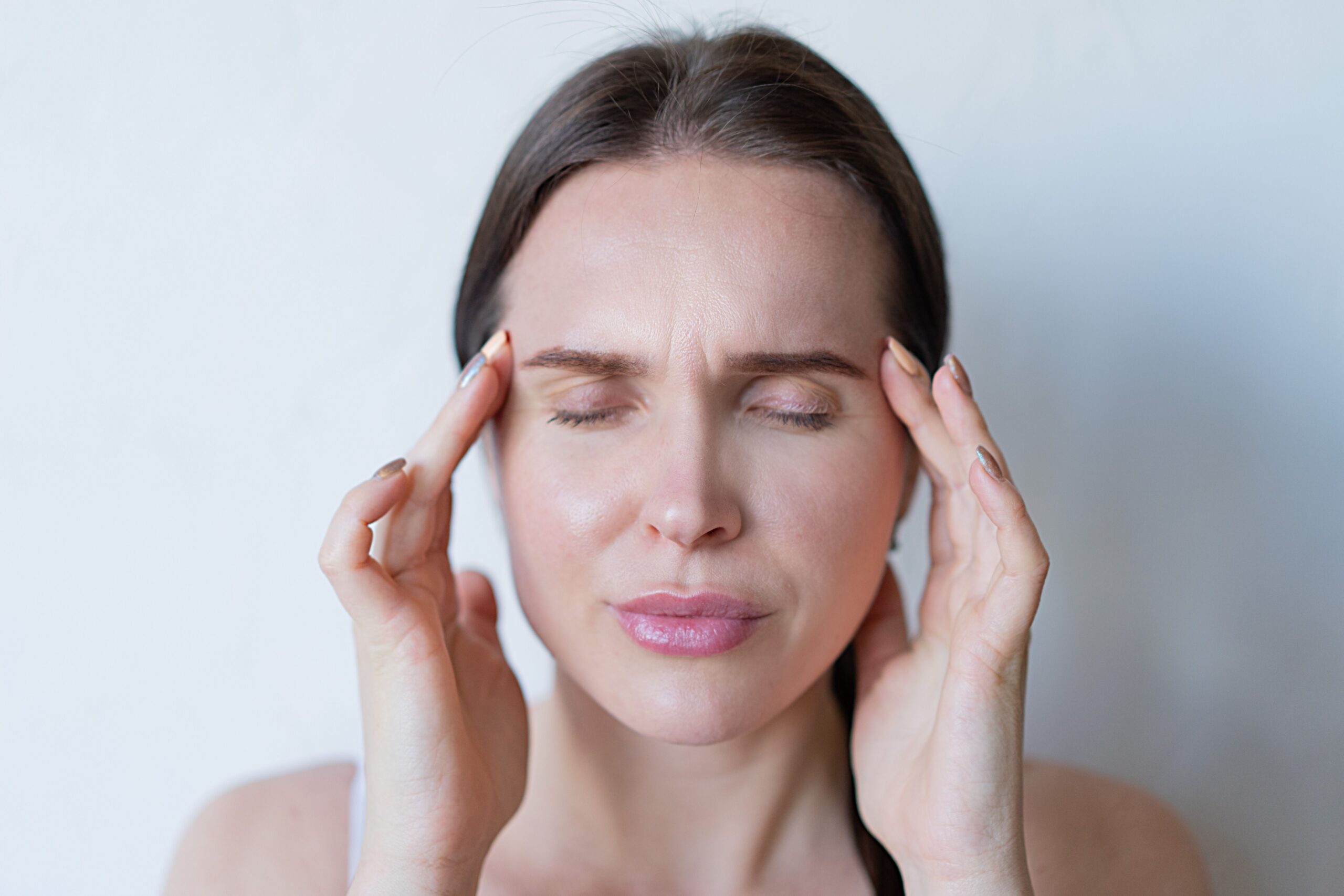
A client texted me last month from a dark bedroom, blinds shut, asking if I could move her appointment.
Not because she didn’t want to come in — because she couldn’t.
Light hurt. Sound hurt.
She’d had three migraines that month, more than she’d had in the previous six combined, and she kept saying the same thing: “Nothing about my life has changed. Why is this happening now?”
Something had changed, actually.
Her hormones had entered perimenopause.
And for a huge number of women, that transition doesn’t just bring hot flashes and mood swings — it brings migraines that are more frequent, more intense, and harder to predict than anything they dealt with in their twenties and thirties.
If you’ve been blindsided by this too, I want to walk you through what’s actually happening in your body, what the research says, and where support — including the bodywork I do — genuinely fits in.
How Common This Actually Is
Migraine isn’t rare, and it isn’t equally distributed between men and women.
Migraines affect over one billion people worldwide, and women are three times more likely than men to experience them after puberty.
Across a lifetime, migraine affects 43% of women compared to 18% of men — a female-to-male ratio of roughly 3:1.
That gap isn’t random.
Estrogen fluctuations are understood to directly contribute to migraine, and they’re a major driver of that 3:1 female-to-male prevalence.
And perimenopause is exactly when estrogen fluctuation goes from a monthly rhythm to something far less predictable.
The prevalence of migraine during perimenopause ranges from about 10% to 29%, with many women experiencing a real increase in how often and how intensely their migraines hit.
Put another way: 37% of women with a history of migraines report their headaches getting worse during perimenopause, even though a smaller group — around 24% — actually notice improvement once they’re fully through menopause.
So if this is a new or worsening problem for you, you’re nowhere near alone in it.
What Hormonal Migraines Actually Are
A hormonal migraine isn’t a different disease from a “regular” migraine — it’s a migraine triggered or intensified by hormone shifts, primarily estrogen. The mechanism comes down to withdrawal, not just level.
Research supports estrogen “withdrawal” as a trigger for migraine without aura, while high estrogen levels can trigger migraine with aura.
This is why so many women notice migraines clustering right before their period — that’s the exact window when estrogen drops sharply.
Hormonally mediated migraines tend to be worse around the time of estrogen drops, such as right before a period and around ovulation.</cite>
Perimenopause takes this same mechanism and turns up the volatility.
Instead of one predictable estrogen dip per month, your levels start swinging unpredictably — sometimes spiking higher than they did in your twenties, sometimes crashing lower, often within the same week.
According to the estrogen withdrawal hypothesis, these fluctuations during perimenopause can contribute to frequent migraine attacks, though improvement is typically expected after menopause once hormone levels settle at a consistently low baseline.
This is also, unfortunately, why hormonally driven migraines can hit harder than what you’re used to.
Hormonally induced migraines are among the most disruptive — more likely to interfere with your ability to function, and less likely to respond to standard treatment, which is exactly why so many women feel like nothing that used to work for them works anymore.
The Stress Piece Nobody Separates Out
Here’s where it gets more layered — because for a lot of women in perimenopause, migraines aren’t purely hormonal. They’re hormonal and stress-driven, often at the same time, often reinforcing each other.
Stress is identified as a trigger in nearly 70% of people with migraine, and the mechanism runs through your nervous system’s stress-response center — the HPA axis.
When you’re under stress, the hypothalamic-pituitary-adrenal axis activates, and migraine sufferers consistently show elevated cortisol, an HPA-axis-regulated stress hormone.
What’s counterintuitive — and this trips a lot of women up — is that migraines often don’t hit during the stressful stretch itself.
Cortisol actually suppresses migraine activity during acute stress, a survival adaptation that keeps you functional during genuine emergencies.
It’s when the stressor resolves and cortisol drops sharply that the suppression lifts and the migraine cascade begins.
This is sometimes called a “let-down” migraine — a migraine that strikes when stress drops, like the first day of a weekend or right after a big deadline passes, reflecting the rapid shift in stress hormones and nervous system balance.
And chronic, ongoing stress — the kind that never fully resolves — creates its own separate problem.
When cortisol stays elevated over time, your nervous system runs at a persistently higher level of excitability, which makes every other migraine trigger more effective against that backdrop.
In plain terms: a dysregulated nervous system lowers your threshold for everything else — hormones, food, sleep, light — to set off an attack.
This is exactly the intersection where perimenopause becomes such a perfect storm.
Fluctuating hormones lower your threshold. A nervous system that’s already stretched thin from years of overgiving, underrecovering, and holding everything together lowers it further.
Put those two together, and it makes total sense that this is the decade migraines often show up loudest.
Common Questions I Hear (And What We Actually Know)
Will my migraines get worse in perimenopause?
For a meaningful portion of women, yes, at least temporarily.
37% report worsening headaches during perimenopause. But this isn’t universal, and it’s not permanent for most women.
Will migraines go away after menopause?
Often, they improve.
Once you’re through menopause and no longer having periods, most women experience fewer migraines, as hormone levels stop the sharp monthly fluctuations that were fueling attacks.
Is this a hormonal headache or a migraine?
Tension headaches tend to feel like a tight band around the head, while migraines involve throbbing pain — often on one side — sometimes with light sensitivity, nausea, or visual aura.
If you’re not sure which you’re dealing with, that’s worth bringing to a doctor rather than guessing.
Can hormone therapy help?
It’s genuinely case by case.
Maintaining a stable estrogen environment through estrogen replacement can benefit migraines driven by estrogen withdrawal, but hormone therapy can also complicate migraine with aura, so this decision needs a doctor who knows your full history — not a blanket answer either way.
How Bodywork Fits In — Honestly
I want to be really direct with you here, because overpromising isn’t how I operate.
CranioSacral Therapy and migraines. This is genuinely a mixed research picture, and I’d rather tell you that than oversell it. Some individual randomized controlled trials have found real benefit — RCT found CST significantly reduced pain, frequency of attacks, and disability, with results holding at follow-up compared to a sham treatment group.
Another single-center RCT found standardized CST effective and safe for reducing migraine intensity, frequency, and headache-related disability.
But a 2024 meta-analysis pooling multiple studies came to a more cautious conclusion: it found CST produced statistically significant but clinically unimportant changes in pain intensity, with no significant effect on disability or headache impact, and rated the overall evidence as very low certainty.
My honest read: CST isn’t a proven migraine cure, and I won’t tell you it is. What it does — well-documented and less debated — is relax myofascial structures and help normalize an overactive sympathetic nervous system, which tends to run high in people dealing with chronic pain.
Given how tightly stress and nervous system regulation are tied to migraine frequency, that’s a reasonable, honest reason to consider CST as one supportive piece — especially if your migraines have a strong stress component — not as a replacement for medical migraine treatment.
Mayan Abdominal Therapy and hormones. This modality doesn’t treat migraines directly, and I won’t claim it does.
What it supports is circulation and tissue health through the body’s core and reproductive systems — the same systems involved in hormone regulation.
For women whose migraine pattern is closely tied to their hormonal cycle, some find that supporting overall hormonal and circulatory health as one piece of a broader plan is a meaningful complement to their medical care. It is not a treatment for hormonal migraine on its own, and I’ll always be straight with you about that.
What Actually Helps: The Fuller Picture
Track your pattern. Keeping a headache diary — tracking symptoms, menstrual cycle, mood, and triggers — can help you and your doctor figure out whether hormones are driving your migraines.
This single habit gives you and any provider real data instead of guesswork.
Medical treatment. An over-the-counter NSAID like ibuprofen or naproxen may be enough for a mild hormonal or PMS-related migraine, and your doctor can prescribe stronger options for more severe attacks.
The hormone conversation. If your pattern lines up closely with your cycle or perimenopause, it’s worth bringing up hormone-focused treatment with your doctor — this is a case-by-case decision, not a one-size answer.
Nervous system support for the stress layer. Since chronic stress lowers your migraine threshold across the board, this isn’t optional self-care — it’s part of treatment.
Breathing exercises like box breathing activate your parasympathetic nervous system and can be a genuinely useful daily practice, not just something to reach for mid-attack.
Protect the basics. Sleep deprivation and dehydration both lower your tolerance for other triggers, so migraine attacks are often about the accumulation of several factors crossing your threshold together, not one single cause.
Post-stress planning. If you notice “let-down” migraines after a demanding week, planning preventive habits for the first 24-48 hours after a high-stress period — hydration, consistent meals, an earlier bedtime, gentle movement — can meaningfully cut your risk.
When to See a Doctor
Please don’t manage this alone in a dark room, hoping it passes. See a doctor if:
- Your migraines have become more frequent or more severe than your previous baseline
- You’re having migraines more than a few days a month
- Over-the-counter treatment isn’t touching the pain anymore
- You’re noticing new symptoms — aura, vision changes, or anything that feels different from your usual pattern
- Migraines are starting to shape your calendar, your work, or your relationships
A doctor who understands hormonal migraine can build a plan specific to where you are in perimenopause — something generic advice can’t do.
The Real Takeaway
If your migraines have gotten worse and you can’t point to anything in your life that’s “changed,” I want you to hear this clearly: something has changed.
Your hormones are in a genuinely more volatile season, and if your nervous system is already carrying a lot, that volatility has less room to move before it turns into a full attack.
This isn’t a mystery you’re failing to solve.
It’s biology, and it has real, researched explanations — and real paths toward relief.
Have you noticed any change with hormone fluctutation? Tell me in the comments, I read every one!
With so much care and compassion,
Serenity